One integrated model
Multiple sources of value
Bringing land, crops, livestock, trees and biomass together to improve ecological outcomes and create commercially resilient value chains.
From a land challenge
to productive value
This is the heart of RAIN's distinctive proposition. Explore the four connected steps:
01 / Restore the land
Careful bush management opens space for grasses and grazing, while retaining and protecting ecologically valuable vegetation. Restoration is approached progressively, with site-specific monitoring.
This describes the intended integrated model. Individual activities are at different maturity levels.
Restoring functional savanna
Bush encroachment can reduce grass cover and the productivity of grazing lands. RAIN's restoration approach centres on selective bush management, vegetation recovery and monitoring the outcome over time. Selected method ("Bush rolling") preserves soil, water and native grasses, encourages the rapid recovery of forage plants and open savannah, and offers a faster, safer and more cost-effective alternative to manual clearing or intensive chemical use.
Working with the ecological context matters: valuable indigenous trees and habitats should be protected, not cleared indiscriminately.
Targeted restoration approach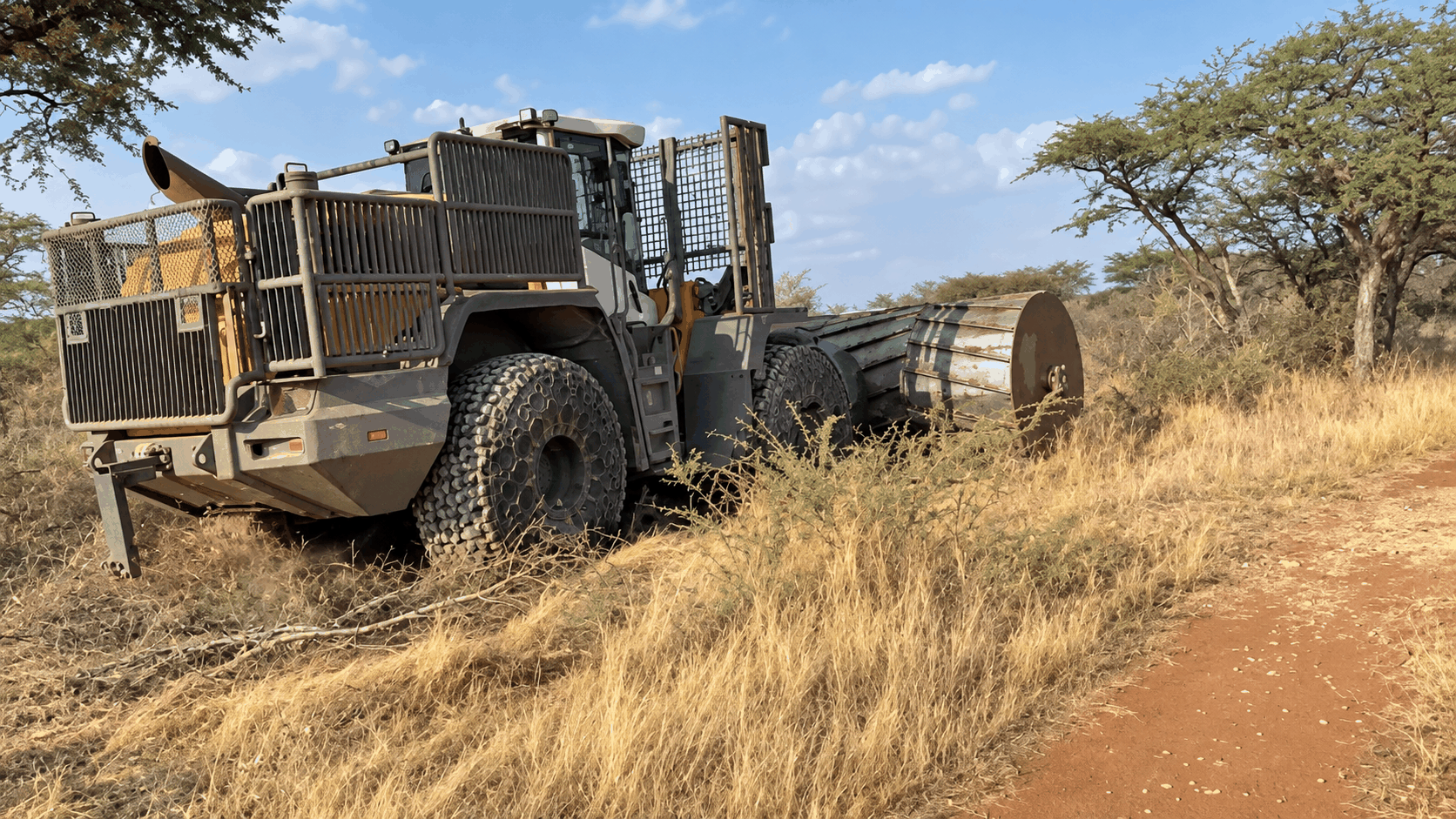
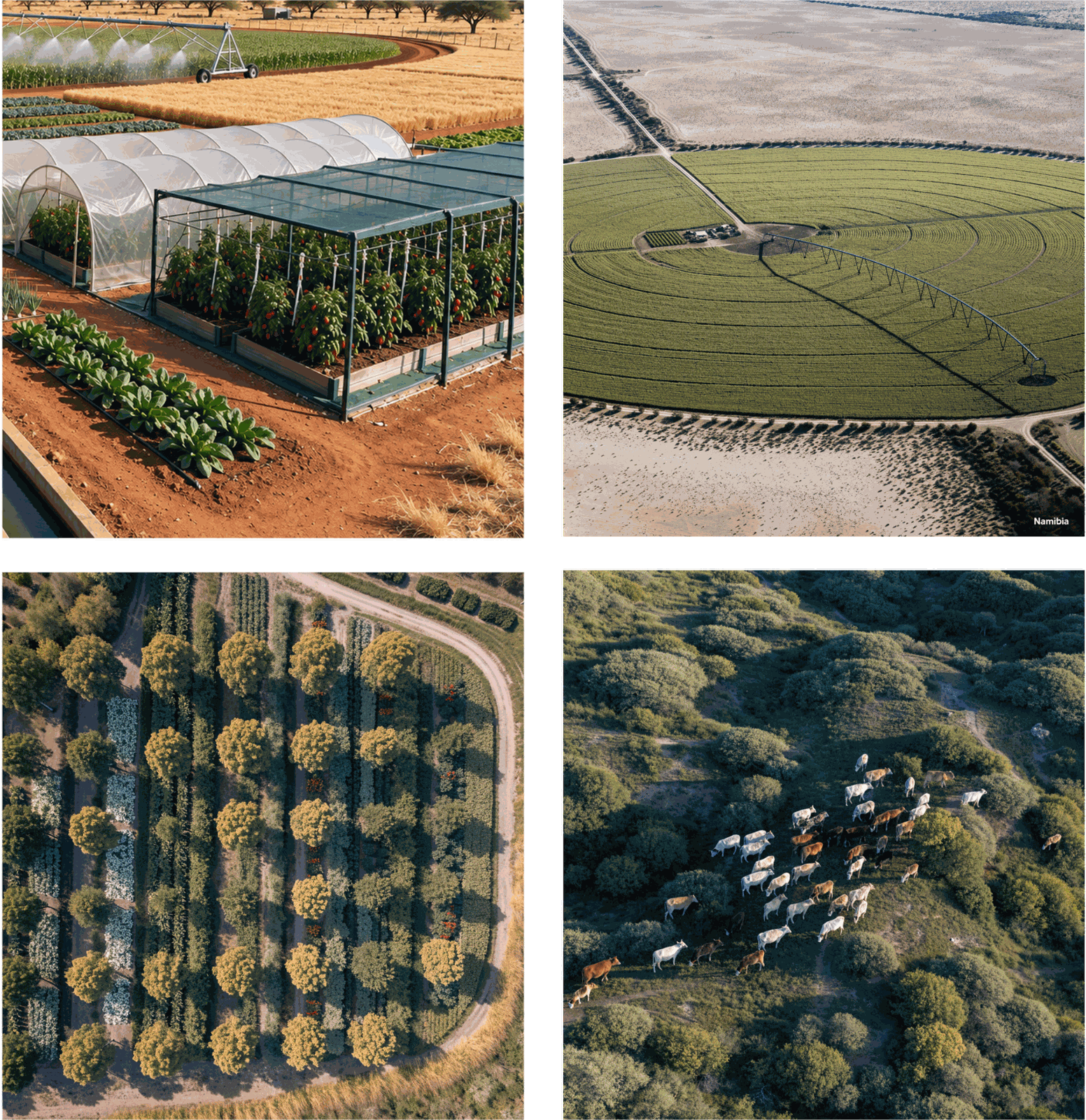
Food production built around the land
The planned agricultural activities include extensive livestock production, crops and vegetables, with irrigation and protected horticulture introduced through the demonstration programme.
Combining these enterprises can diversify production, make more effective use of resources and support activity throughout the year. Production plans—including product types and volumes—will be aligned with market demand.
Market-led developmentFast-growing timber within a broader farming system
RAIN’s agroforestry concept integrates selected Paulownia hybrids with agricultural production. The hybrids were chosen for their suitability to Namibia’s climate, relatively low water requirements and high-quality timber—lightweight yet strong, sometimes described as “aluminium wood.” Because Paulownia can resprout after harvesting, it may also support repeated growth cycles without replanting after each harvest.
The local performance, water demand and commercial yield of the forestry system will be validated during demonstration.
Premium wood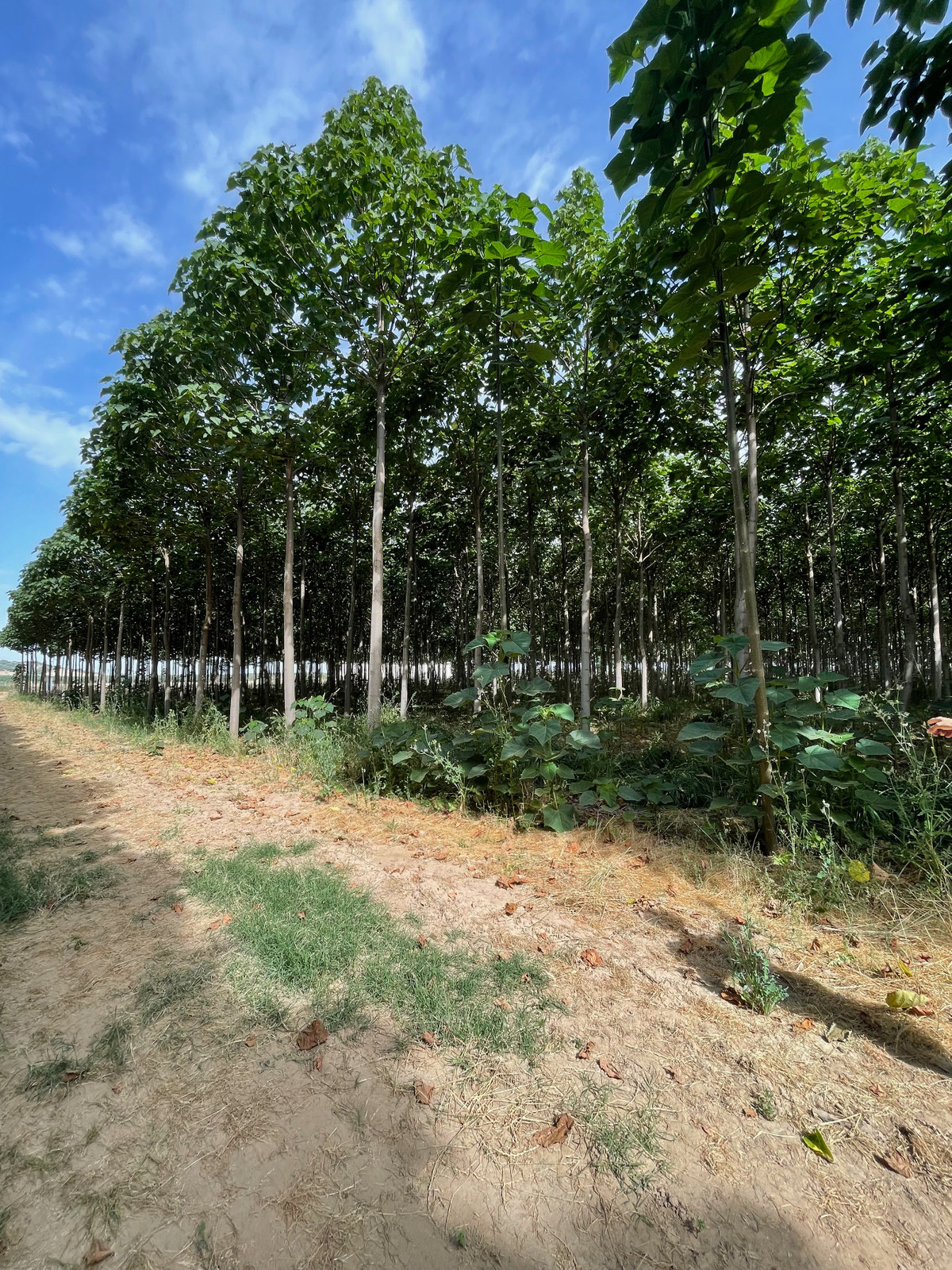
Turning woody biomass into useful products
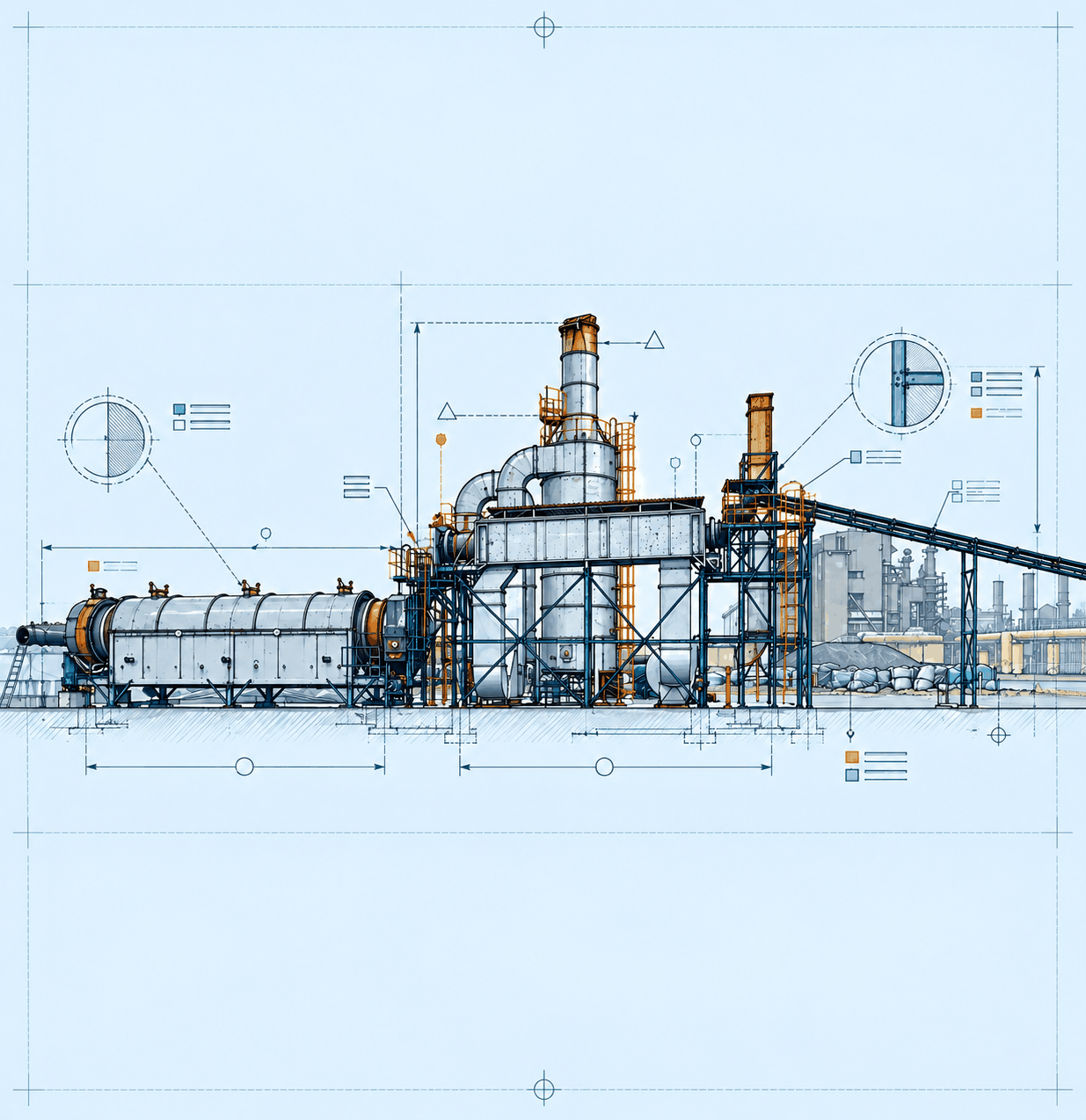
Harvested biomass from bush management is a prospective input for pyrolysis and other circular processing. Biochar can be considered for soil improvement and durable carbon applications, subject to appropriate technical controls.
The associated commercial and carbon-removal opportunities depend on validated operations and relevant certification pathways.
Industrial conceptEvidence at every stage
Agronomic monitoring, measurement and industrial discipline underpin development choices. Proposed tools include remote sensing, field trials, drone and satellite monitoring, AI, data systems and independent verification.
Measure
Set baselines for land health, water use, crop performance and ecological outcomes.
Validate
Test assumptions in demonstration operations before replicating them at scale.
Improve
Use monitoring, technical expertise and operational feedback to refine the model.