
Restoring nature
Investing in people
The purpose of RAIN is to create measurable environmental benefits alongside sustainable economic opportunity, with communities as long-term partners.
Healthy landscapes are
productive landscapes
Ecological restoration is not separate from the business model. It is one of its foundations.
Savanna restoration
Selective bush management and recovery of grassland function are intended to improve ecosystem health and grazing conditions for both livestock and wildlife.
Soil regeneration
Rotations, soil cover and biochar applications are being considered as tools to improve agricultural resilience and soil regeneration.
Efficient use of water
Precision irrigation, water accounting and field performance data are important considerations in a semi-arid environment.
Space for ecosystems to recover
RAIN's long-term land-use concept includes a dedicated biodiversity reserve and restoration measures intended to support functioning savanna ecosystems.
The proposed reserve spans approximately 14,000 hectares. Its development will be guided by detailed mapping, ecological baselines and stewardship plans, with low-impact eco-tourism envisaged as part of the visitor experience.
14,000 ha planned reserve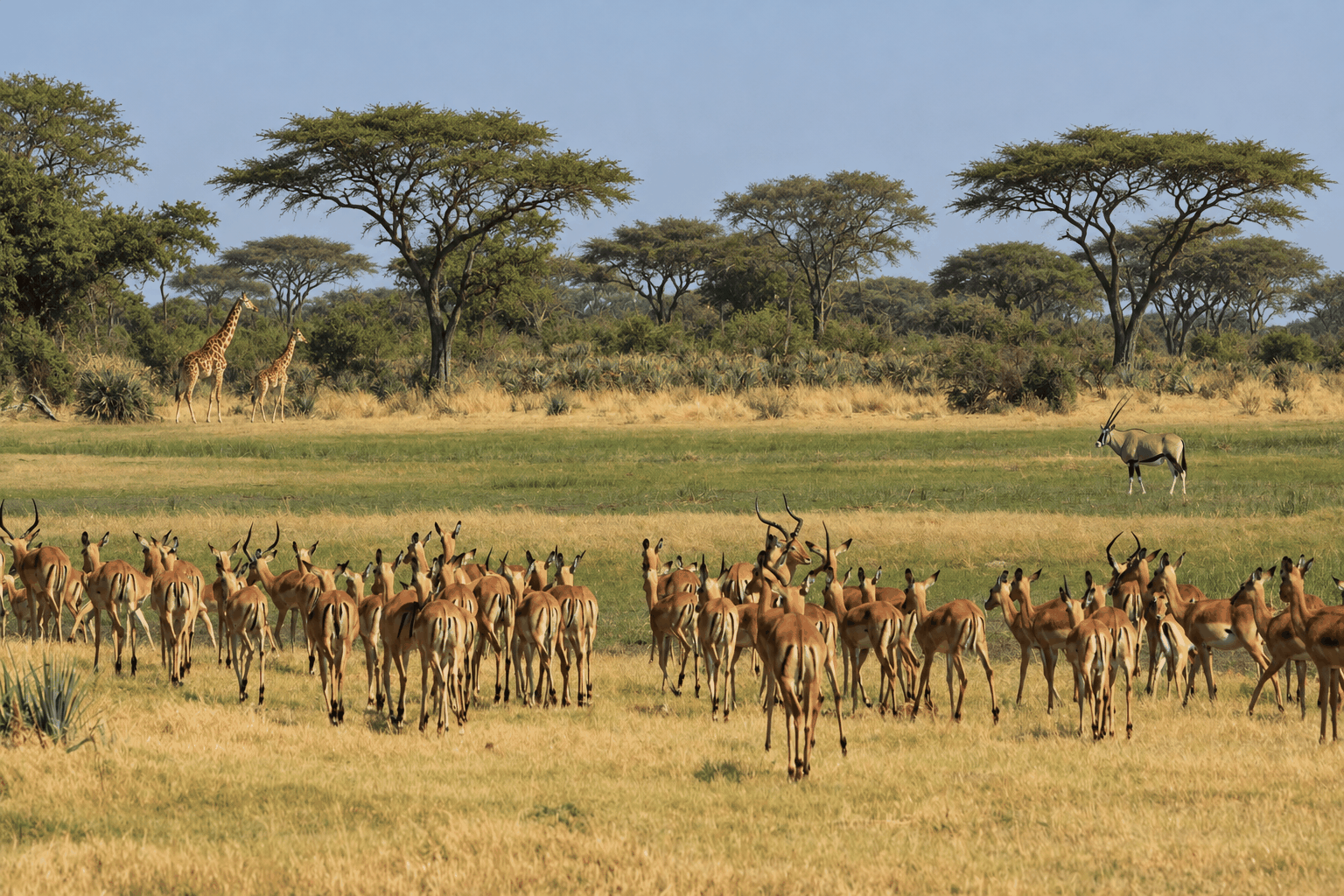
Climate value that can
be measured and verified
RAIN’s carbon strategy combines engineered and nature-based pathways to address climate change and generate potential carbon credits. Biomass from bush management and forestry, including Paulownia residues, may be converted into biochar for use as a soil amendment or concrete additive, creating a potential carbon dioxide removal (CDR) pathway. Paulownia planting and the restoration of native vegetation may support Afforestation, Reforestation and Revegetation (ARR) credits, while regenerative agricultural and pastoral practices—including improving soil organic matter, vegetation cover and the use of organic amendments—may qualify under Agricultural Land Management (ALM).
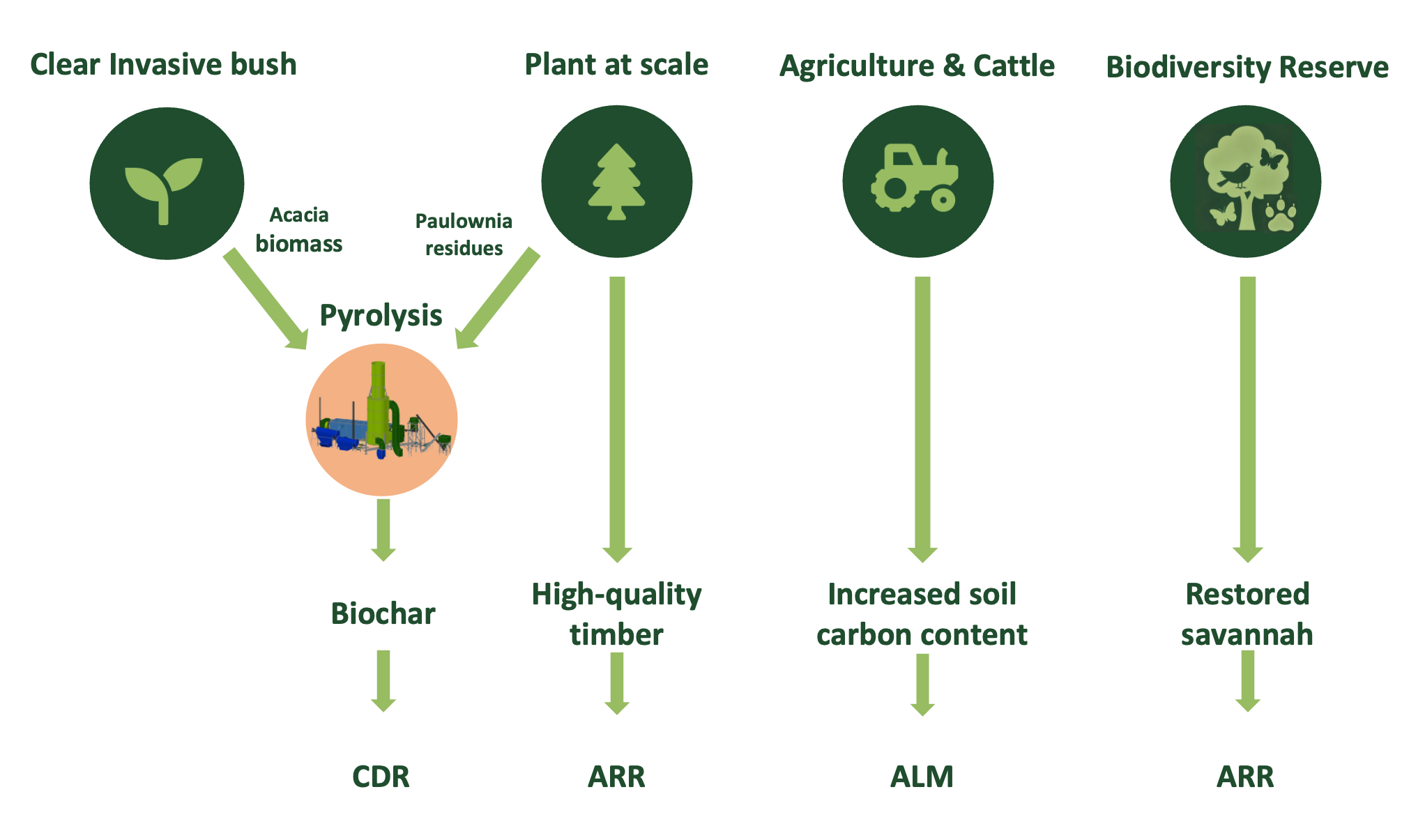
Together, these activities are intended to increase carbon storage in biochar, trees and soils. At full scale, the project targets the potential removal or sequestration of up to 1.2 million tonnes of CO₂ per year. The interventions may also contribute to cooler local conditions and influence rainfall patterns, though these potential effects would need to be assessed over time. The climate benefits and any carbon-credit issuance or revenue would depend on eligible methodologies, robust monitoring and independent verification.
No issued credits, independently verified sequestration results or certifications are claimed by this mock-up.
Shared opportunity
Local capabilities
The programme aspires to create stable employment and develop transferable agricultural and industrial skills.
Direct jobs at full scale
Long-term employment target, not a current employee count.
Women in the workforce
A stated inclusion objective for recruitment and development.
Community participation
Community-centred governance, local procurement and training initiatives form part of the intended approach.
Ambition is not the same as achievement
We intend to distinguish milestones achieved, programmes underway and long-term targets. Claims about environmental and social outcomes will be supported by documented methodologies (Verra, FSC) and independent evidence where appropriate (collaboration with NUST).
Follow verified project progress →Only dated, evidence-backed achievements.
Activities underway, subject to milestones.
Ambitions, clearly described as projected outcomes.